Donald Trump and former President Richard Nixon at a dinner in Houston, Texas on March 11, 1989
In his clueless and clumsy style, JD Vance has unmasked the cynical corruption at the core of Trump’s White House. Speaking at the Richard Nixon Presidential Library and Museum on June 25, the vice president said, “As I joked…backstage, if Watergate happened tomorrow, it would be like a 12-hour news story. The idea that it would have taken down a presidency is crazy.”
Was Vance joking? With him as with so many others around Trump as well as the president himself, the line between egregious ignorance and brazen deception is often hard to discern. Born ten years after the massive scandal of Watergate ended Nixon’s presidency in disgrace, he may well be unaware of the historical facts. That may be why he could also say something as stupid and false as claiming that Nixon was forced out by “the deep state.”
Actually, Nixon thrown out of office by the Senate’s most conservative Republicans, who warned of his inevitable conviction of high crimes in a pending impeachment trial. Back in those days, “conservative” was not yet synonymous with crooked.
What Vance unintentionally got right is the seamless congruence between the corrupt presidency he serves and the criminal regime he sought to whitewash. His comments implied that the Congress and the media have degenerated precipitously since then, also true. His grinning indifference to Nixon’s felonious, authoritarian presidency should serve as ample warning to the nation about his own character and ambitions.
For the sake of political hygiene, let’s assume for a few moments that this repellent politician simply doesn’t know what he’s talking about (not the first time, in his case). Such historical illiteracy would be unusual for a Yale Law graduate, as historian Timothy Naftali observed, but Vance often sounds strangely mindless.
Beyond the “third-rate burglary” of the Democratic National Committee headquarters in Washington’s eponymous hotel, which exposed the Nixon administration’s epic personal and partisan corruption, Watergate ranged across a panoply of criminal schemes – from corporate payoffs, in cash, to the Republican Party and the Committee to Reelect the President (CREEP), to money laundering, witness tampering, bribery, domestic spying, and orders to inflict violence on peaceful antiwar protesters.
Through Congressional hearings and investigative journalism, the public came to understand the secret life of the Nixon Administration -- a pageant of sleaze that had commenced no later than 1969, when the president’s top aides set up a secret multi-million-dollar slush fund -- run out of a back room in a townhouse basement near Washington’s Dupont Circle -- that funneled cash payments to Republican Congressional midterm candidates. By the time Nixon was running again in 1972, the townhouse operation had metastasized into several major bribery schemes connected to the Committee to Reelect the President, or CREEP as it came to be known.
The ITT Corporation, to take just one of the more notorious cases, coughed up a big donation for the 1972 Republican National Convention to “settle” a Justtice Department antitrust probe. (Nixon can be heard on a 1971 White House tape discussing the proper timing of the ITT bribe: “Now this is very very hush hush and it has to be engineered very delicately and it'll take six months to do properly…”) Dairy producer lobbyists agreed to donate millions after Nixon sent his Treasury Secretary John Connally to “shake them down,” as the president himself put it. The Committee for the Re-Election of the President was also illegally hauling in many millions of dollars from corporations, many of which felt pressured into making contributions.
Neither Nixon’s gangsterish fundraising nor his repeated violations of federal law and Constitution troubled the Republican right. To them his resignation represented not a victory for the rule of law, but the triumph of everything they hated. He had asserted the will to power and the ideology of authoritarianism against the liberal enemy, whose names he had actually compiled on lists. Many on the Republican right came to view him much more favorably after Watergate than before.
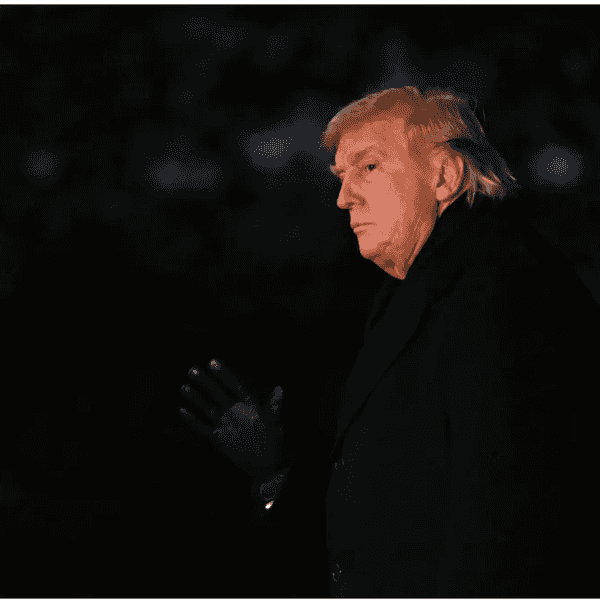
That mangy cohort included young Donald Trump, who openly declared his admiration for Nixon and said the disgraced autocrat “should have burned” the Watergate tapes. They conducted a long, mutually flattering correspondence. With his innate political sense, Nixon predicted that Trump would succeed if he ever ran for office.
Nixon’s ruthless amorality was admired, too, by a young Republican named Roger Stone, who got involved in CREEP’s “ratfucking” dirty tricks and later had Tricky Dick’s smirking likeness tattooed between his shoulders. That all came before emerged as the driving force behind Trump’s political ambitions. And Roy Cohn, the soulless right-wing lawyer who became Trump’s role model, was a Nixon crony of much longer standing.
If so many of Nixon’s offenses sound familiar, it is because Trump has surrounded himself with such people from the beginning. It is no surprise that these habitual prevaricators would falsify history to prettify the late miscreant’s arrogant snout. They will have to do the same thing for Trump someday.